


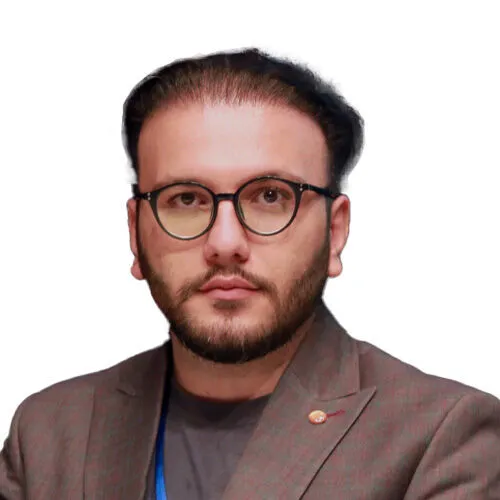
Amirhossein Ghasemi
Master’s in Chemical Engineering
Sharif University of Technology
Amirhossein Ghasemi, researcher in energy policy and geopolitics, is a member of Iran’s Oil and Energy Youth Committee and part of the national foresight team. A Sharif University graduate, he works on futures studies in oil, gas, and petrochemicals, focusing on energy policy assessment, sustainable transitions, and the geopolitical, economic, and technical aspects of oil governance to guide future energy strategies.
Participates in
TECHNICAL PROGRAMME | Energy Leadership
Public Policy (Global and Local) - Climate Change, Transition Management, Supply Security and Energy Affordability
Forum 26 | Hall 5 Digital Poster Plaza 5
13
October
10:00
12:00
UTC+3
The global energy transition towards renewables poses complex challenges for oil rich countries. Furthermore, such countries face increasing pressure to diversify their energy systems. Current models of energy transition in fossil fuel rich countries suffer from two critical limitations. First, they are predominantly techno economic, overlooking the entrenched socio political structures, the Petrostate complex, that actively resist change. Second, they treat the state as a monolithic actor, failing to account for the emerging, polycentric forces (e.g., digital communities, private tech startups) that could disrupt the status quo. This creates a significant gap in understanding non linear, socially driven transition pathways. The energy transition represents a critical strategic imperative for resource-dependent nations. This necessity is driven by the dual pressures of finite hydrocarbon reserves, which guarantee eventual resource depletion, and the increasing likelihood of binding international climate change legislation that could severely constrain future fossil fuel extraction. Therefore, the aim of this research is to answer the question: How do the dynamic interactions between the current structure and emerging multipolar actors shape the path of energy transition in Iran? To answer this question, we employ a systematic mapping approach. The study will categorize and track the influence, resources, and policy positions of both incumbent state actors and emerging polycentric forces to provide a definitive map of the transition arena. The expected results of this research are: The contested transition in oil-rich countries will be highlighted, highlighting the conditions under which multipolar actors can create turning points against the prevailing resistance. In addition, the findings will provide policymakers in petrostate countries with a practical tool to design interventions that empower bottom up innovation and mitigate the socio political risks of transition, ultimately outlining a viable pathway for oil rich nations to circumvent political paralysis and harness their vast resources for a renewable future. Keywords: Energy Transition, Petrostate, Iran, Polycentric Governance, Decarbonisation Policy.